Source freestanding electronic refrigeration prep table for Pizza, Salad, and Cake Prep
Compare 30 freestanding electronic refrigeration prep table models from verified suppliers. Evaluate specifications like temperature range, capacity, and cooling methods to find the right unit for commercial kitchens.
Key considerations
Products List


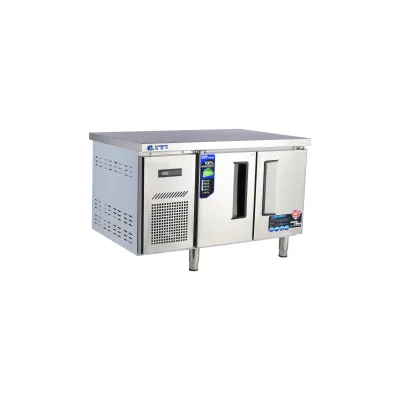


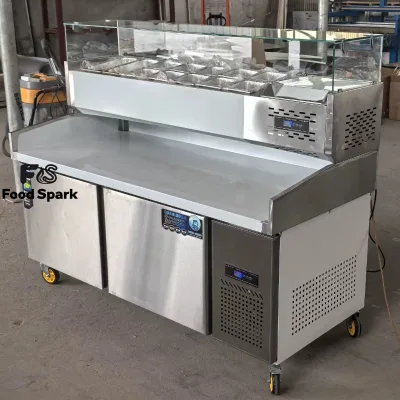
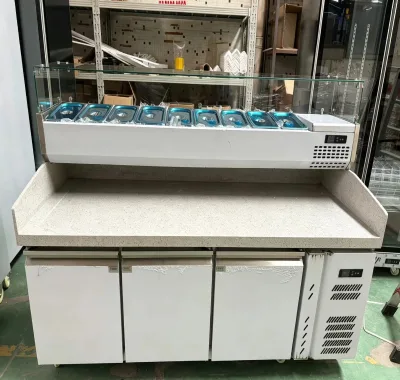


Comprehensive Sourcing Guide
Strategic Sourcing Guide for Freestanding Electronic Refrigeration Prep Tables
Understanding Technical Specifications and Core Functionality
When sourcing freestanding electronic refrigeration prep tables, buyers must first distinguish between units designed for general cold storage and those engineered for active food preparation. The market offers a diverse array of configurations, ranging from single-temperature chest freezers to complex multi-zone prep tables. A critical observation in the current supply landscape is the variation in temperature control mechanisms. Some units operate within a narrow band of 0℃ to 5℃, ideal for fresh produce storage, while others offer a dual-range capability spanning from +2°C to +8°C for refrigeration and -18°C to -22°C for freezing. This dual functionality is essential for kitchens requiring a single footprint for both thawing and holding ingredients.
The cooling method is another pivotal technical specification. While some models utilize static cooling, which relies on natural convection, advanced units employ direct or air cooling systems to ensure uniform temperature distribution across the work surface. The insulation thickness, often cited as 50 mm PU foam in high-performance models, plays a significant role in energy efficiency and temperature stability. Buyers should verify the specific insulation material and thickness for their intended application, as thinner insulation may lead to higher energy consumption and temperature fluctuations during high-traffic service periods.
The physical dimensions of the unit are equally critical for kitchen layout planning. Standardized models often adhere to specific footprint requirements, such as L 1200 * W 760 * H 1050 MM or L 900 * W 700 * H 850 MM. These dimensions dictate not only the floor space required but also the compatibility with existing kitchen workflows. The worktop type, typically a flat stainless steel top, must be evaluated for durability and ease of cleaning. Furthermore, the door configuration varies significantly; while some units feature swing doors suitable for standard access, others utilize folding doors or double doors to maximize access to the interior while maintaining a compact profile.
Compliance, Certification, and Regulatory Standards
Navigating the regulatory landscape for commercial refrigeration equipment requires a rigorous verification of certifications. In the global market, the CE mark is a fundamental requirement, indicating conformity with health, safety, and environmental protection standards for products sold within the European Economic Area. However, buyers targeting other regions must look for additional certifications. For instance, units intended for the Chinese market or those manufactured there often carry the CCC (China Compulsory Certification) mark.
More comprehensive compliance is often indicated by a combination of certifications such as CE, ISO, RoHS, CB, SASO, EMC, GS, and ETL. The presence of multiple certifications suggests that the manufacturer adheres to various international safety and environmental standards. RoHS compliance ensures the product is free from specific hazardous materials, while ETL and GS marks indicate rigorous testing for electrical safety and mechanical integrity. Buyers should not assume that a single certification covers all regulatory requirements for their specific location. Instead, they must request documentation proving that the specific model meets the local electrical codes and safety standards of the destination country.
The electrical standards for these units also vary. While many models operate on a standard 220V 50Hz supply, some are designed with dual voltage capabilities, supporting 220V 50Hz / 110V 60Hz. This flexibility is crucial for international procurement where power grids differ. The power consumption, which can be as low as 173 W for certain efficient models, should be verified to ensure the unit does not overload the kitchen's electrical infrastructure. Additionally, the compressor brand, whether imported or a domestic Chinese brand, and the refrigerant type, such as R134A or R600A, must be checked against local environmental regulations regarding greenhouse gas emissions.
Cost Drivers and Pricing Structure Analysis
The pricing of freestanding electronic refrigeration prep tables is influenced by a complex interplay of factors, including material quality, cooling technology, and certification breadth. The observed price range in the market spans from $150 to $1,986, reflecting the vast difference between basic storage units and high-end, feature-rich prep tables. The primary cost driver is the material composition. Units constructed from Stainless Steel 201 offer a more economical solution, whereas those utilizing Stainless Steel 304 provide superior corrosion resistance and longevity, justifying a higher price point.
The type of compressor is another significant determinant of cost. Premium units often feature compressors from recognized brands like Secop, while others may utilize domestic brands. The efficiency and noise levels of the compressor directly impact the operational cost and the user experience, thereby influencing the initial purchase price. Furthermore, the cooling system complexity adds to the cost; units with auto defrost capabilities and direct cooling systems are generally more expensive than those with manual defrost and static cooling.
Minimum Order Quantity (MOQ) also plays a role in the effective cost per unit. The market shows an MOQ range of 1 to 5 units, offering flexibility for small businesses and restaurants that do not require bulk purchasing. However, buyers should be aware that unit prices may decrease with higher order volumes, although specific volume discounts are not explicitly standardized in the general market data. Packaging standards, such as export cartons or plywood cases, add to the logistics cost, particularly for international shipments where robust packaging is necessary to prevent damage during transit.
Typical Applications and Operational Use Cases
Freestanding electronic refrigeration prep tables are versatile assets designed for various commercial food service environments. Their primary application is in the food preparation area, where they serve as a hybrid unit combining a work surface with a refrigerated storage compartment. This design allows chefs to keep ingredients at optimal temperatures while preparing meals, reducing the need to move back and forth to a separate walk-in cooler or refrigerator.
The specific application depends heavily on the temperature range and door configuration. Units with a temperature range of 2℃ to 8℃ are ideal for pizza prep tables, salad bars, and cake displays, where fresh ingredients and prepared dishes need to be kept chilled but not frozen. In contrast, models capable of reaching -18°C to -22°C are better suited for freezing applications, allowing for the storage of meats, seafood, and frozen desserts directly at the preparation station. The note regarding pan configurations, such as 1/1+31/3+31/6 pans, indicates that these units are specifically designed to accommodate standard gastronorm pans, making them highly compatible with professional kitchen workflows.
The door type also dictates the suitability for different environments. Folding doors are often preferred in tight kitchen spaces where a swing door would obstruct traffic flow, while double doors provide easier access for larger items or faster retrieval during peak service times. The inclusion of optional caster wheels with brakes enhances mobility, allowing the unit to be moved for cleaning or reconfiguration of the kitchen layout. This adaptability makes these units suitable for a wide range of settings, from high-volume commercial kitchens to smaller boutique cafes and catering operations.
Supplier Evaluation and Quality Assurance Protocols
Evaluating suppliers for freestanding electronic refrigeration prep tables requires a focus on manufacturing capabilities and quality control processes. Buyers should prioritize suppliers who provide transparent information about their production standards and material sourcing. The origin of the product, often China, should be verified, but the specific factory location and production capacity are equally important. A supplier with a robust supply chain can ensure consistent quality and timely delivery, which is critical for commercial projects with tight deadlines.
Quality control should be a central part of the evaluation process. Buyers must inquire about the testing procedures for critical components such as the compressor, insulation, and electrical systems. The presence of certifications like CE, ISO, and CCC is a strong indicator of a supplier's commitment to quality, but it should be complemented by requests for specific test reports or quality assurance documentation. The insulation thickness and material quality should be verified through physical inspection or third-party testing to ensure they meet the claimed specifications.
Furthermore, the customization capabilities of the supplier are a key differentiator. Many manufacturers offer customization options to meet specific client needs, such as custom dimensions, specialized door types, or unique control panel configurations. Buyers should assess the supplier's ability to handle these customizations without compromising the structural integrity or performance of the unit. The packaging method, whether export cartons or plywood cases, should also be evaluated to ensure the product arrives in pristine condition.
Long-Term Procurement and Maintenance Considerations
Long-term procurement success for refrigeration equipment hinges on understanding the maintenance requirements and the lifecycle of the product. The defrost type, whether manual or automatic, significantly impacts the operational workload. Manual defrost units require regular intervention to prevent ice buildup, which can reduce efficiency and increase energy consumption. In contrast, auto defrost units offer greater convenience and consistent performance but may come with a higher initial cost and potentially higher maintenance complexity.
The choice of refrigerant is another long-term consideration. R134A and R600A are common refrigerants, but their environmental impact and availability may change over time. Buyers should consider the future regulatory landscape regarding refrigerants and choose units that are compliant with current and anticipated environmental standards. The compressor brand and warranty terms are also critical; a reputable compressor brand often implies better reliability and easier access to spare parts.
Finally, the power source and voltage compatibility must be aligned with the long-term operational environment. Units with dual voltage capabilities offer greater flexibility for future relocation or expansion. The control panel position, typically front-mounted, should be ergonomic and easy to access for routine adjustments. By carefully considering these long-term factors, buyers can ensure that their investment in freestanding electronic refrigeration prep tables remains a valuable asset for years, minimizing downtime and maximizing operational efficiency.
Comparative Analysis of Key Product Attributes
To assist buyers in making informed decisions, the following table summarizes the key attributes observed in the market for freestanding electronic refrigeration prep tables. This comparison highlights the variations in specifications that influence performance, cost, and suitability for different applications.
| Attribute | Observation A | Observation B | Observation C |
|---|---|---|---|
| Temperature Range | 0℃ ~ 5℃ | 2℃ ~ 8℃ | +2~+8°C / -18~-22°C |
| Cooling Method | Static Cooling | Direct Cooling | Air Cooling |
| Defrost Type | Manual Defrost | Auto Defrost | Manual / Auto Options |
| Material | Stainless Steel | Stainless Steel 201 | Stainless Steel 304 |
| Door Type | Swing Door | Folding Door | Double Doors |
| Capacity | 401-500L | 201-250L | Variable (Model Dependent) |
| Voltage | 220V 50Hz | 220V | 220V 50Hz / 110V 60Hz |
| Certifications | CE | CE, ISO, CCC | CE, RoHS, ISO, CCC, CB, SASO, EMC, GS, ETL |
| Insulation | High Density Foam | 50 mm PU Foam | 50 mm PU Foam |
| Function | Cold Storage | Freezing, Cold Storage | Cold Storage & Freezing |
This table illustrates that no single product satisfies all requirements for every buyer. The choice between a single-temperature unit and a dual-temperature model, or between manual and auto defrost, depends entirely on the specific operational needs of the kitchen. Buyers must carefully match these attributes to their workflow requirements to ensure optimal performance and value.
FAQs
What temperature ranges do these prep tables support?
These units support ranges from 0℃ to 5℃ or 2℃ to 8℃ for refrigeration, with some models offering freezing capabilities down to -18℃ to -22℃. This dual functionality allows kitchens to store fresh ingredients or frozen goods within a single footprint.
Which certifications are available for these refrigeration units?
Available certifications include CE, ISO, CCC, RoHS, CB, SASO, EMC, GS, and ETL. Buyers should verify specific model documentation to ensure compliance with local safety and environmental regulations for their target market.
Can I find units with automatic defrost systems?
Yes, some models feature auto defrost systems to ensure consistent performance and reduce manual maintenance. Other units utilize manual defrost types, which may require regular intervention to prevent ice buildup and maintain efficiency.
What materials are used for the construction of these tables?
Construction materials typically include Stainless Steel 201 or 304 for durability and corrosion resistance. The insulation consists of 50 mm PU foam to ensure energy efficiency and stable temperature control during operation.
How is the cooling method implemented in these units?
Cooling methods vary between static cooling, direct cooling, and air cooling systems. Advanced units often employ direct or air cooling to ensure uniform temperature distribution across the work surface and storage compartments.
What are the standard voltage requirements for these devices?
Most units operate on 220V 50Hz, while some models support dual voltage capabilities of 220V 50Hz or 110V 60Hz. This flexibility is crucial for international procurement where power grid standards differ significantly.
Which door types are available for these prep tables?
Available door types include swing doors, folding doors, and double doors. Folding doors are preferred in tight spaces, while double doors provide easier access for larger items during peak service times.
Can these units be customized for specific kitchen needs?
Customization is available for dimensions, door configurations, and control panel positions. Manufacturers can often adapt units to fit specific workflow requirements or accommodate standard gastronorm pan configurations.